We act for you, or we build for you. Never both on the same project.
Client-side project management, superintendent and contract administration services for owners, tenants and institutions. Delivered by people who have carried construction risk on their own balance sheet.
- Do we administer a contract we hold. The rule is in the appointment, not in a brochure
- Never
- States: Adelaide, Melbourne and Sydney, with people on the ground in each
- 3
- Years of the director’s experience on the contractor’s side of the table
- 15+
- Fee basis, set out in full before you appoint us
- Published
Advice that carries cost knowledge
We price the work and we build the work, so we are telling you what we know.
When we advise you on what a tender really contains, what a programme can actually carry or what a variation should cost, we are drawing on numbers we have had to stand behind on our own contracts.
A team that has priced the work, carried the risk and defended a claim knows where the money and the time go. It knows which provisional sum is hiding real scope, which rate is carrying somebody else’s risk, and where a bar chart has quietly moved the critical path. That knowledge is current rather than benchmarked, because it comes from tendering and delivering the same kind of work in the same market in the same month.
It only works if you can rely on whose side we are on, so we have written that down and put it in the appointment rather than leaving it as an assurance.
The rule
We will not act as your project manager, superintendent, contract administrator or certifier on a project that JCGAU is building, tendering for, or has any commercial interest in. If we are acting for you and an opportunity to build arises, we tell you and we withdraw from one role or the other, and you choose which. That is written into our appointment rather than left to good intentions.
Diagram comparing two contract structures. On the left, JCGAU builds for you and sits below the contract line as head contractor, with an independent superintendent above the line. On the right, JCGAU acts for you and sits above the contract line beside the owner as client's representative, while a separate head contractor sits below it. JCGAU does not take both roles on the same project.
Mode A. We build for you
Owner
Superintendent
another firm, not us
certifies, values, directs
JCGAU, head contractor
carries the build risk and the margin
Subcontractors and suppliers
Our interest sits below the line. Someone independent has to hold the certifying pen.
Mode B. We act for you
Owner
JCGAU as your representative
fee only, no build margin
administers on your behalf
Head contractor
a builder we tender, recommend and administer
Subcontractors and suppliers
Our interest sits above the line, with yours. We are paid a fee, and we hold the builder to their contract.
What it actually buys you
The value shows up on the day a claim lands.
Project management sounds abstract until a variation arrives with a number on it. That is the moment you find out whether anyone is reading the contract on your side.
The path a variation claim takes on a construction contract. The contractor submits a claim with a cost and a time effect. Without a representative the assessment sits in one place and the owner sees the outcome in the progress claim. With a superintendent or contract administrator acting for the owner, the claim is tested against the contract for entitlement, against the drawings for scope and against the programme for float before it is valued, and the owner receives a recommendation with a number and a reason. The diagram shows the same claim producing two different outcomes.
One claim, two outcomes
The contractor submits a variation
a cost, a time effect, and a reason
Without a representative
The assessment sits with the party that raised it
Entitlement, scope and programme effect assessed in one place
You see it in the progress claim
After the work is done and the leverage has gone
Where the gap shows up
The conversation is now about a completed item rather than a decision about work not yet started.
Someone acting for you
Tested before it is valued
Contract for entitlement, drawings for scope, programme for float
A recommendation, with a number and a reason
Approved, reduced, or rejected, and why
You decide before the work proceeds
Direct it, change it, or decline it. The decision is yours while it still costs nothing to make.
The claim is identical in both columns. What differs is whether the contract was read on your behalf before the money moved, and whether the decision reached you while there was still a choice to make. That is the gap we fill.
What we bring
A builder’s literacy, pointed the other way.
Most of what goes wrong on a construction contract goes wrong in a document that a client reads once and a contractor reads five times.
- EstimatingWe price the way a contractor prices, so we know what a tender has left out, where the provisional sums are hiding real scope, and which rate is carrying somebody’s risk.
- BuildabilityDesign reviewed for how it gets built before it goes to tender. Access, sequence, tolerance, and the details that quietly become variations once someone has to construct them.
- ProgrammeA contractor’s programme is an argument, not a report. We interrogate the logic, the float and the resourcing, and we say so when the critical path is not where the bar chart claims it is.
- ClaimsExtensions of time, variations, delay and disruption. We have written these claims, and having written them is a different vantage point from having only read them.
How you appoint us
Five engagement types, each with what it does and does not carry.
The first decision is not what needs doing, it is how you want to engage. These are the five appointments we take, in the language the contract will use.
| Appoint us as | When it suits | What we are accountable for | What we are not |
|---|---|---|---|
| Client-side project manager | You want one party carrying the project from feasibility through to the end of the defects liability period. | The programme, the budget, the consultant team, the procurement strategy and the reporting you receive. | Constructing the works. That sits with the head contractor under their own contract. |
| Superintendent | A contract is in place under AS 4000, AS 4902 or AS 2124 and it needs administering and certifying. | Assessing claims, valuing variations, determining extensions of time, and issuing certificates on the contract rather than on the meeting. | Advocacy. The superintendent’s certifying function is exercised honestly and reasonably between the parties, and we will say so to both. |
| Superintendent’s representative | Your superintendent needs day-to-day presence on site under a delegated appointment. | Site attendance, instructions, inspections and the written record, within the delegation given. | Anything reserved to the superintendent under the delegation, which stays with them. |
| Project and budget review | A project is already under way and you want an independent read on where it actually stands. | A fixed scope and fixed fee assessment of programme, cost to complete, variations, claims exposure and the contract position, delivered as a written report. | Ongoing management, unless you separately appoint us to it afterwards. |
| Early contractor involvement | There is a concept, a site or a tenancy and no documented set yet, and you want the cost and buildability read before committing to full documentation. | Constructability review, an indicative cost range with the assumptions listed, and the procurement route we would recommend. | A fixed price. An early range is a range, and we will always be explicit about which you are receiving. |
Every one of these is scoped in writing before it starts, including the fee basis. The engagement type is named in the appointment, so there is never a question later about which role we were holding.
Where we come in
An appointment can start at any of five points.
Where a client-side appointment starts, drawn across the five stages of a project. Stage one is feasibility and budget, where the question is whether the site or the tenancy carries the brief and what it costs. Stage two is the consultant team and documentation, where the design is scoped, appointed and reconciled against the budget at each stage. Stage three is procurement and tender, where the market is tested and the recommendation is written. Stage four is delivery and superintendency, where claims are assessed, variations are priced and the programme is interrogated. Stage five is practical completion, the defects liability period and close-out, where the final account is settled and the asset is handed over with its record. The diagram shows that an appointment can begin at any stage, and that the earlier it begins the more of the budget is still in play.
We can come in at any of these five points
01
Feasibility and budget
What the site or tenancy carries, and what it costs.
02
Consultants and documentation
Scopes, appointments and a cost plan tested at every design stage.
03
Procurement and tender
The market tested and a written, defensible recommendation.
04
Delivery and superintendency
Claims assessed, variations priced, the programme interrogated.
05
Completion and defects liability
Final account settled and the asset handed over with its record.
How much of the budget is still in play
- Feasibility and budgetMost of it
- Consultants and documentationA great deal
- Procurement and tenderSome
- Delivery and superintendencyContingency
- Completion and defects liabilityThe final account
Most appointments we are asked about start at stage three or four, because that is when the risk becomes visible. The appointments that return the most start at stage one, because that is where the decisions that set the cost are still open. We take both, and we will tell you honestly what is still available to influence.
Already under way? A fixed scope, fixed fee project and budget review is the usual starting point.
The credentials behind it
What sits under the appointment.
- JCGAU builder licence
- BLD 344769
- Director experience
- 15+ years
- States
- SA · VIC · NSW
- Capacity
- $20m single contract
- Management plans
- Written and in use, not certified
Independence by rule
A written bright line, not an assurance. We withdraw from one role or the other, and you choose which.
A record that survives
Instructions, assessments and certificates kept so a decision can be reconstructed two years later.
Claims literacy
Extensions of time, variations and prolongation read by someone who has written them.
One director, named
The person who prices your project is the person who runs it.
The roles
The appointment you need has a name: they are not interchangeable.
These four functions are often grouped under the single phrase “project management”, and they are not the same appointment. They carry different duties, they are priced differently, and one of them carries a duty that is not owed to you. Our appointment names which of them we hold, so there is no question later about what you engaged us for.
| Appointment | What it actually does | Duty is owed to | Where the conflict bites |
|---|---|---|---|
| Client’s representative | Speaks for the owner. Coordinates consultants, holds the programme and budget, runs reporting and decisions. | The owner, as agent | If the representative’s firm is also tendering the build, the recommendation and the interest sit in the same place. The structure creates that, not anyone’s intent. |
| Project manager | Scope, programme, cost plan, risk register, procurement strategy, stakeholder and authority management. | The owner | Same. The recommendation on which builder to appoint is the whole value of the role. |
| Superintendent under AS 4000 or AS 2124 | Two jobs in one appointment. Directs the contractor as the principal’s agent; but when certifying payment, valuing variations, assessing extensions of time and issuing practical completion, must act honestly and impartially between the parties. | Split. The owner for directions, both parties for certification | The acute one. Certifying under a contract held by a related party is a structural problem rather than a question of anyone’s good faith, which is exactly why it is better avoided than managed. |
| Superintendent’s representative | Delegated day-to-day functions on site, within limits the superintendent sets in writing. | As delegated | Inherits the same problem, one step removed. |
| Contract administrator | Processes claims, variations, notices and correspondence. Keeps the record that a dispute is later decided on. | The owner | Assessing claims made by a related party puts the same party on both sides of the assessment. |
| Independent certifier | Certifies to a financier, a purchaser or a third party who is not a party to the building contract. | The addressee of the certificate | Requires independence from both the owner and the builder. We would decline this role where we have any interest in either. |
Contract terminology follows the standard forms in general use in Australia. The exact wording of any appointment should be settled by your own legal adviser. This page describes practice, not advice.
Certification only means something when the person signing has no interest in the answer.

What you get
Deliverables, by stage: named, so you can hold us to them.
| Stage | What we produce | What it is for |
|---|---|---|
| Establishment | Project execution plan, governance and decision map, risk register, procurement strategy, preliminary programme, initial cost plan | So that everyone knows who decides what, and when a decision becomes expensive. |
| Design | Consultant scopes and appointments, design programme, buildability review, cost plan reconciled at each design stage, authority and approvals tracker | So the budget is tested against the drawings at each stage rather than once at tender. |
| Procurement | Tender strategy, tender documents assembled, tender period management, tender assessment and a written recommendation with a like-for-like comparison and the qualifications each tenderer attached | So the recommendation is defensible to a board, and so the cheapest number is not mistaken for the lowest cost. |
| Construction | Monthly report. Progress against programme, cost against budget with committed and forecast, variations register with status, EOT register, risk and safety summary, photographs. Claim assessment and certification where we hold that role. | So there are no surprises, and so a claim is assessed on the contract rather than on the meeting. |
| Completion and defects | Practical completion inspection and defects schedule, handover data set, warranties, as-builts, O&M manuals, certificates, final account settlement, defects liability management to expiry | So the building is handed over as an asset with a record, not a set of keys. |
For landlords and asset owners
The lease sets the date. Everything expensive happens before it.
Most of what is written about project management speaks to tenants and investors. The owner with a floor coming back next year is the reader we had in mind here, because that is the gap we most often get called into.
A landlord buys something quite different from a tenant. A tenant is building a workplace once. A landlord is running a rolling programme of lease events, each of which carries a make-good position, a re-letting decision, an incentive negotiation and a capex question, and each of which lands whether or not anyone has prepared for it.
The work that protects the asset happens in the eighteen months before a lease expires, not in the fortnight after the tenant hands the keys back.
A landlord's decisions around a single lease event, shown on a timeline. Twenty-four to twelve months before expiry the questions are whether the tenant renews and what the make-good obligation is actually worth. Twelve to six months out the decisions are the make-good settlement, the incentive works offered to a new tenant, and any base building upgrade worth bundling. From six months the work is procured and built to a date fixed by the new lease. The diagram shows that the value is captured in the first window and spent in the last one.
One lease event, three windows
24 to 12 months out
Where the value is
Condition survey against the lease. What the make-good obligation is actually worth, priced, before it becomes a negotiation.
12 to 6 months
Where the decisions are
Make-good settled or enforced. Incentive works scoped and capped. Base building upgrades bundled while the floor is empty.
6 months to handover
Where the money goes
Procurement, construction and handover against a date the lease has already fixed. Very little is still negotiable here.
New lease commences
An empty floor is the cheapest time to do base building work and the only time a make-good position is worth anything.
Most landlords engage someone in the third window, which is the one where every number is already set. We would rather you called us in the first.
What we do for a landlord
Six pieces of work, named.
- Make-good assessment
- A condition survey read against the actual lease and the fitout approvals, priced as a scope of works rather than estimated as a number. That is the difference between a position you can hold and an opening bid.
- Make-good settlement or enforcement
- Most make-good obligations are settled in cash rather than performed. Whether that is the right outcome depends on what you intend to do with the floor, and the answer changes the number. We will tell you which one favours you before you commit to either.
- Tenancy coordination
- Fitout guidelines, design review against base building capacity, contractor induction and access rules, and inspection at completion. Somebody has to hold an incoming tenant’s contractor to the rules of your building, and it should not be the centre manager doing it in the margins of their week.
- Incentive and contribution works
- Where a lease deal includes a landlord contribution or works, the scope needs a cap, a specification and a completion test. An uncapped contribution to a tenant’s fitout is a blank cheque with your name on it.
- Base building upgrade
- Lifts, amenities, lobby, end-of-trip, mechanical plant, and the energy performance work that increasingly decides whether a floor leases at all. An empty floor is the cheapest floor to do any of it on.
- Capex sequencing
- Across a portfolio, the question is not what each building needs. It is what order to do it in, against lease expiries, so the disruption lands when the floor is empty and the spend lands when it is deductible against a leasing outcome.
Fees
We publish the basis, so you can compare like with like.
A fee is much easier to judge when you can see how it is built and what would change it. So here is ours, before you ask.
- Fixed fee by stage
- Our default. A lump sum against a defined scope and a defined programme duration, split across the stages above. You know the number before you commit.
- Percentage of construction cost
- Available where a client prefers it, and we will say plainly what we think of it: it pays us more when your project costs more. If you choose it, we would rather cap it.
- Time-based with a ceiling
- For early advisory, feasibility and scoping work where the scope genuinely is not knowable yet. Rates and the ceiling are agreed in writing first.
- What extends the fee
- A programme extension beyond the agreed duration that is not our doing, a material scope increase, or an additional stage. Each of those is a written variation to our appointment, priced before it is incurred. The same discipline we would apply to a builder.
- What does not
- Ordinary project difficulty. Chasing a late consultant, arguing a variation down, or sitting in a hard meeting is the job.
Where we act
Adelaide, Melbourne and Sydney, with people in each.
A client-side appointment is worth very little from another city. Somebody has to be able to walk the job on a Tuesday morning without booking a flight.
Client-side project management in Adelaide
Head office. Development approval and building rules consent through the South Australian planning system, and a contractor market we price in every week.
Client-side project management in Melbourne
Building surveyor appointment, occupancy permits and the Victorian variations to the National Construction Code. An active team running Victorian projects.
Client-side project management in Sydney
Principal certifier appointment, the New South Wales registration and declaration regime, and the certification path that goes with it. An active team in New South Wales.
Our independence rules
Published, so the boundary is checkable rather than asserted.
These are conditions of appointment. They are written into the engagement, which is the only place a rule of this kind is worth anything.
- We do not act client-side on a project we are buildingIf JCGAU holds or is tendering the head contract, we do not hold any client-side appointment on the same project. No exceptions and no carve-outs.
- The rule follows the interest, not the entity nameA related party is treated exactly as JCGAU would be. There are no carve-outs and no nominee arrangements.
- The appointment carries real authorityA project manager needs the authority to instruct consultants and to decline a variation, or the appointment cannot deliver what you are paying for. We scope that authority into the engagement at the start.
- Certification is only signed where we are independent of both sidesCertifying to a financier requires independence from the principal and the contractor. Where we hold it, we certify. Where we do not, we say so at the outset and help you appoint someone who does.
- We resource what we takeEvery appointment is staffed against a named team before it is accepted, so the commitment you are given is one we have already checked we can keep.
Projects
 JCGAU
Labs & Research Facilities
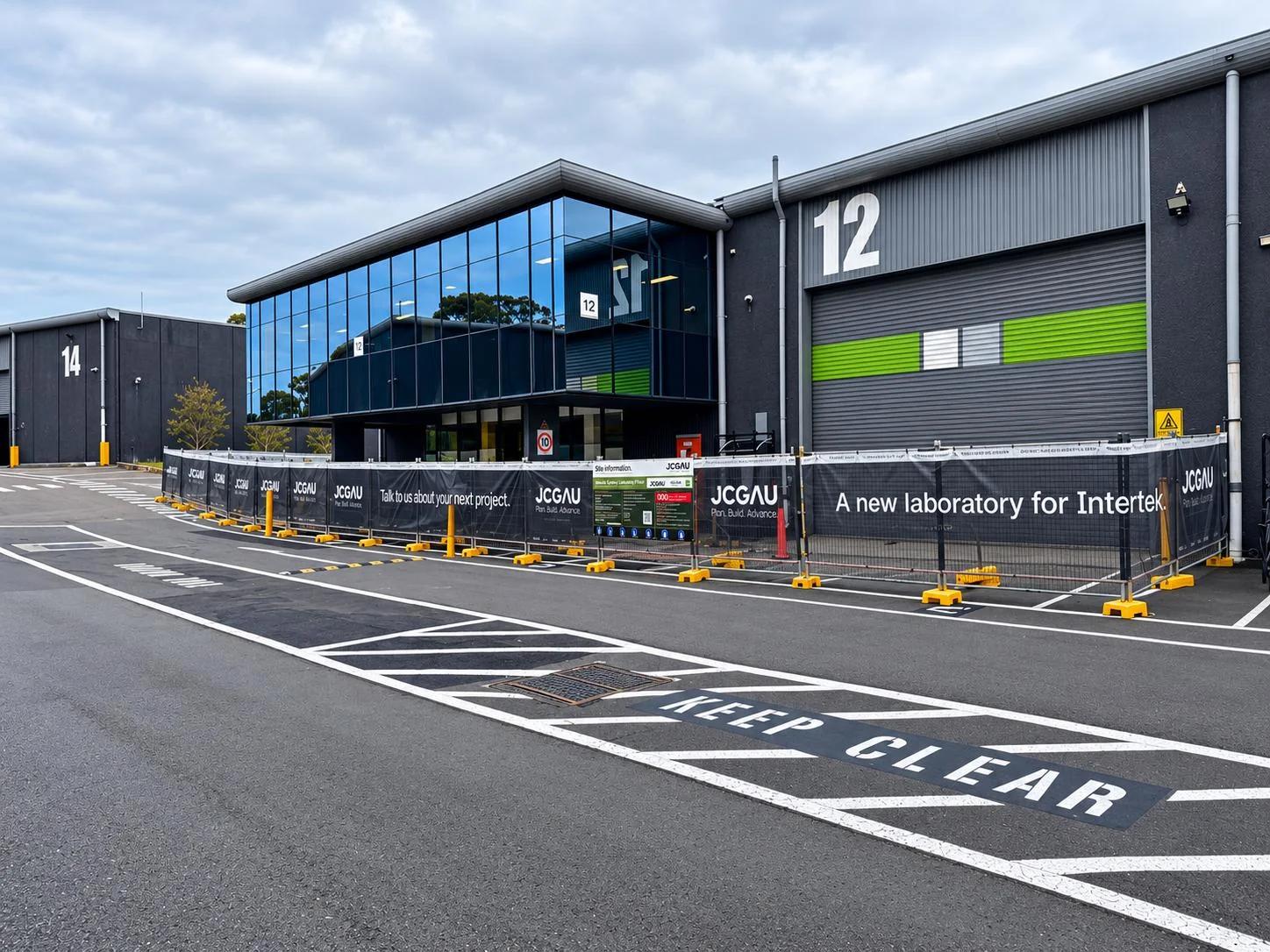
Intertek Sydney Laboratory
Intertek Testing Services · Botany, NSW · In progress
- JCGAU
Labs & Research Facilities
Intertek Melbourne Laboratory Feasibility
Intertek Testing Australia · Melbourne, VIC · Delivered
- Prior firm
Aged Care
AVEO Carisfield
AVEO · Complete
- Prior firm
Aged Care
AVEO Riverview
AVEO · Complete
- Prior firm
Education
Le Fevre High School
The education department · Complete
- Prior firm
Education
Mount Barker High School
The education department · Complete
- Prior firm
Education
Parafield Gardens High School
The education department · Complete
- Prior firm
Education
SAE campus
Navitas · Complete
- Prior firm
Education
St Columba College Stage 2
Complete
Prior firm: the director’s contribution at a previous firm, not JCGAU-delivered work.
Related
Delivery Models
Turnkey design and construct, with no client-side manager required. Four ways to buy a building, and what each one leaves on your side of the table.End of Lease Defit
Back to base building, documented against the lease. Strip-out and make-good for commercial tenancies, scoped from the lease and priced line by line.Commercial Construction
Office, education, health, hospitality and retail. New builds, design and construct, fitout, refurbishment and end-of-lease make-good, under one contract.
Where to go next
Delivery models
Construct only, design and construct, managing contractor and early involvement.Commercial construction
Offices, retail, hospitality and institutional work, from fitout to new build.Industrial construction
Warehouses, distribution and production facilities, and the fitout inside them.End of lease defit and make good
Scoping, pricing and executing the obligation before the lease date decides it for you.How we work
How we price, procure, administer and report, described as mechanisms you can test.
Questions
Can you manage a project that another builder is constructing?
Yes. That is the normal shape of the client-side appointment. We tender it, we recommend a builder, and then we administer their contract on your behalf.
Can you act as superintendent under AS 4000?
Yes, on a contract we do not hold. The role requires certifying, valuing and assessing honestly and impartially between the parties, which is not something a related party can credibly do.
We already have an architect running the project. What would you add?
Architects lead projects well and often. What we would look at with you is simply whether every contract administration function has a clear owner, and if it already does, we will say so and leave it alone.
Do you replace our consultants?
No. We appoint, coordinate and hold them to their scopes. A project manager who duplicates the consultant team is a cost, not a control.
At what project size does this make sense?
When the number of parties exceeds what one person on your side can hold. That is usually earlier than people expect. It is about the number of interfaces, not the contract value.
What if we want you to build it after all?
Then we stand down from the client-side role and you appoint someone else to it, or we stay on your side and someone else builds. We will tell you which we think is better for you, and you decide. What we will not do is quietly hold both.
What is the difference between a client-side project manager and the builder’s project manager?
The builder’s project manager is paid by the builder and is accountable for the builder’s result: their scope, their programme, their margin. They are usually very good at it. They are simply not on your side of the contract, and on the day your interests and theirs diverge, the question is who is reading the contract for you.
Do I need a superintendent as well as a project manager?
Often the same person does both, and on a small project that is sensible. They are different functions though. The project manager runs the project for you. The superintendent performs the certifying functions the contract names, and has to do that honestly and impartially between the parties even though you are paying them. If a proposal does not tell you which of the two it is offering, ask.
How is client-side project management priced in Australia?
Three ways, and we set out ours on this page: a fixed fee against a defined scope and duration, a percentage of construction cost, or time-based with a ceiling. The structures are standard across the market. What is not standard is publishing which one you use and what moves it, which is why we do.
Is our project too small for this?
Probably not. Most of this category is written for institutional capex programmes, so a single tenancy, a warehouse, a clinic or a school hall reads as though it does not qualify. It does. The test is the number of parties you are holding, not the contract value.
We are a landlord, not a tenant. Is this for us?
Yes, and it is the part of the market that is least well served. Make-good assessment, tenancy coordination, incentive works, base building upgrades and capex sequencing around lease expiries are a different job from delivering one fitout, and there is a section on this page about exactly that.
Tell us which side of the line you need us on.
If you are appointing a builder, we can tender for it. If you are appointing someone to hold that builder to their contract, we can do that instead. Either conversation starts the same way.