Building inside a facility that cannot stop.
Warehouse office and amenities, re-racking, dock upgrades, cold storage, plant rooms and services replacement. Carried out inside operating industrial facilities in SA, VIC and NSW.
- Project capacity under a single contract
- $20m
- States we build in: South Australia, Victoria and New South Wales
- 3
- Unplanned service isolations is the standard we work to
- 0
- Every instruction priced and approved in writing
- 100%
The premise
The building is not the constraint: the operation is.
An industrial refurbishment is a logistics problem with a construction problem inside it.
Most industrial work is not greenfield. It is a mezzanine going into a working warehouse, a dock being widened while trucks still arrive, a cold room being added to a food facility under audit, or twenty-year-old services being replaced without stopping production.
The construction methods are ordinary. What is not ordinary is doing them beside a live forklift fleet, inside a building whose stock cannot go anywhere, on a site where an hour of unplanned downtime can be worth more than a week of construction.
Work front
Stage 1: zone 1, behind the hoarding
Hoarding line
it moves with each stage
Operating
zones 2 and 3
Separate site access and dock
Stage 2
Work front in zone 2. Zone 1 back, zone 3 operating.
Stage 3
Work front in zone 3. Zones 1 and 2 operating.
The hoarding line moves. The despatch operation does not stop. It relocates.
What makes or breaks it: a separate site access and dock. Forklift and construction traffic that never share a route. A stock relocation plan written by the operator, not by the builder. And a hoarding that is rated for what is stacked against the other side of it.
The work
What we do inside operating facilities.
- Warehouse office and amenities
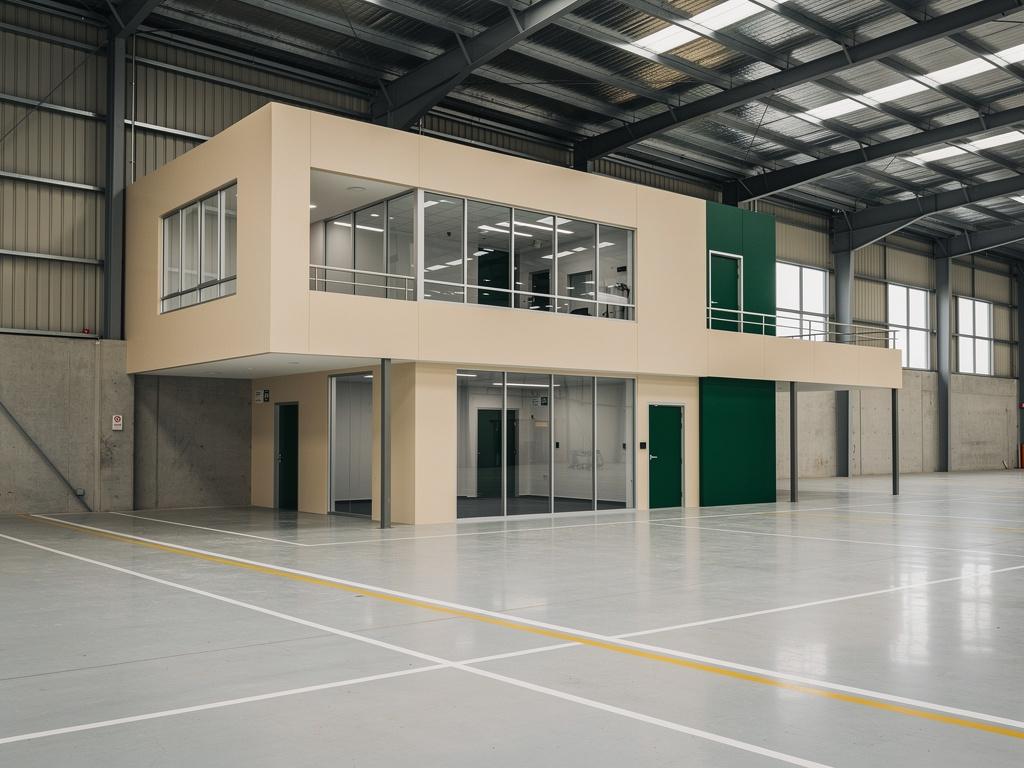
- Two-storey inserts, mezzanines, meeting and training rooms, lunchrooms and end-of-trip. A small commercial fitout with a warehouse’s access constraints and an operating floor below it.
- Re-racking and reconfiguration
- Changing the rack layout changes the sprinkler design basis, the aisle widths and often the floor loading. It is a construction project with a fire engineering component, not a furniture move.
- Dock and hardstand upgrades
- New dock positions, leveller replacement, canopies, pavement repair and drainage. Almost always staged, because the dock is the part of the building that cannot be closed.
- Cold storage and controlled environments
- Insulated panel, floor heating, condensate, defrost and hygiene detailing. Food and pharmaceutical facilities also bring an audit regime that construction has to work inside.
- Plant rooms and services replacement
- Compressed air, process water, trade waste, switchboard replacement and lighting upgrades. The programme is written around isolation windows rather than around trades.
- Compliance upgrades
- Fire system upgrades, accessibility works, essential safety measures brought back to certifiable condition. Often driven by an audit or an insurer rather than by choice.
An hour of unplanned downtime can be worth more than a week of construction. We plan accordingly.
How we protect the operation
The controls that are not optional.
- A separate site entranceConstruction traffic and operational traffic do not share a route, a gate or a dock. Where the site cannot provide two, the programme changes rather than the rule.
- Traffic management written by the operatorYour team knows where the forklifts actually go, which is not always where the plan says. We write it with them and reissue it every time the work front moves.
- Rated hoardingHoarding in a warehouse frequently has stock stacked against the other side of it. It is designed for that, not just for sight lines.
- Isolations booked and permittedEvery isolation is scheduled with operations, has a named person on each side and a written permit, and is restored and tested before the shift that needs it.
- Fire systems never quietly impairedAny impairment is recorded, time-bounded and notified to whoever holds the building’s fire safety obligation. This is a hard rule.
- Hot works with a watch and a stand-downIn a building holding combustible stock, hot works is the single highest-consequence activity on site.
- Housekeeping to the operator’s standard, not oursIn a food or pharmaceutical facility the site tidiness standard is an audit item. We work to theirs.
Projects
 JCGAU
Labs & Research Facilities
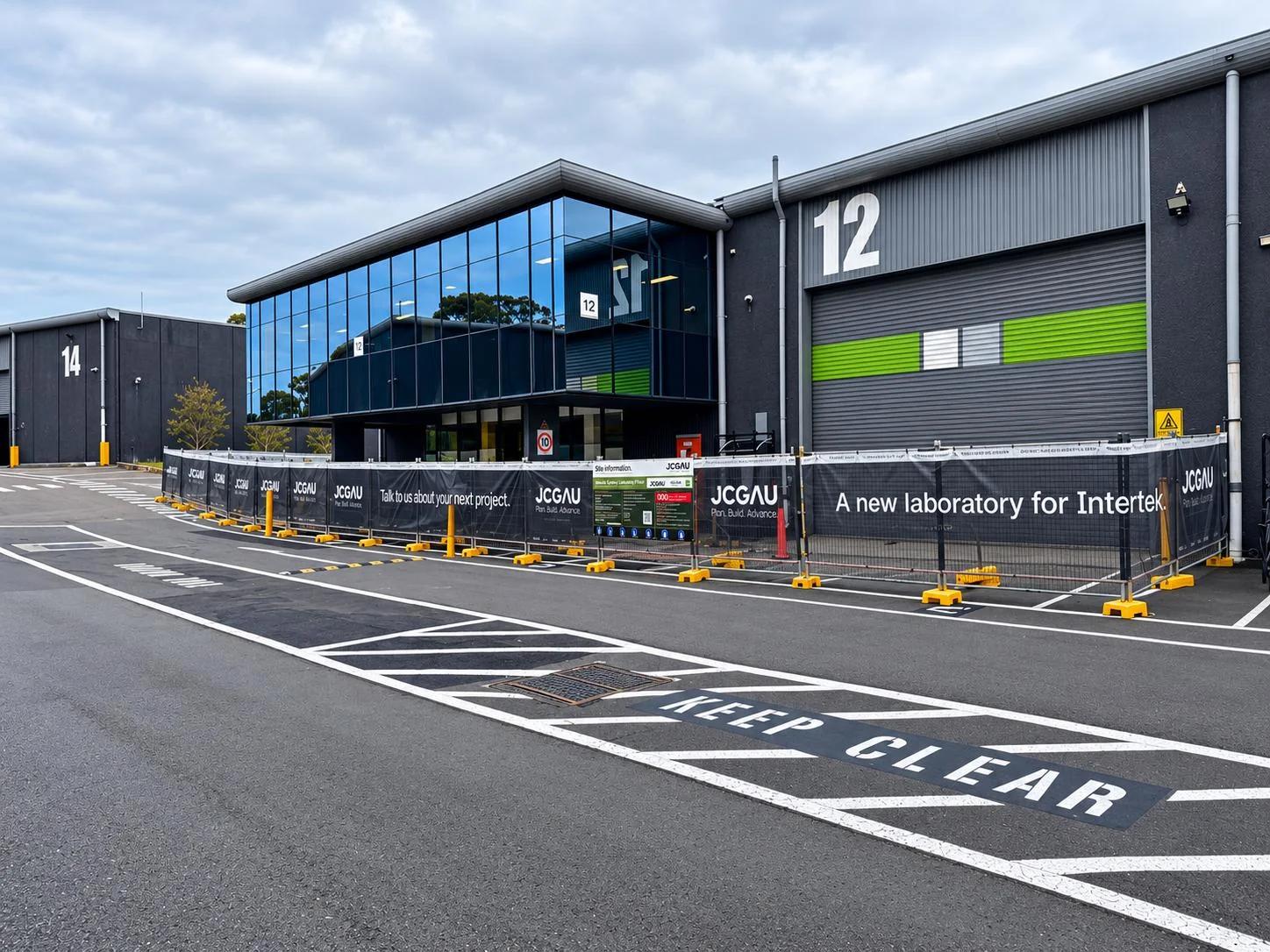
Intertek Sydney Laboratory
Intertek Testing Services · Botany, NSW · In progress
- JCGAU
Labs & Research Facilities
Intertek Melbourne Laboratory Feasibility
Intertek Testing Australia · Melbourne, VIC · Delivered
- Prior firm
Aged Care
AVEO Carisfield
AVEO · Complete
- Prior firm
Aged Care
AVEO Riverview
AVEO · Complete
- Prior firm
Education
Le Fevre High School
The education department · Complete
- Prior firm
Education
Mount Barker High School
The education department · Complete
- Prior firm
Education
Parafield Gardens High School
The education department · Complete
- Prior firm
Education
SAE campus
Navitas · Complete
- Prior firm
Education
St Columba College Stage 2
Complete
Prior firm: the director’s contribution at a previous firm, not JCGAU-delivered work.
Also within industrial construction
Industrial New Builds
Portal frame, hardstand and the services that make the warehouse work. Greenfield warehouses and manufacturing facilities.Industrial Design & Construction
Priced once, with the engineering carried inside the contract. Design and construct on a performance brief written in numbers.Industrial End of Lease Defit
Strip-out and make-good, with the waste stream accounted for. Slab, coatings, racking, bunding and external areas scoped from the lease.
Related
Fitout & Refurbishment
Office, workplace and commercial fitout, including staged refurbishment of buildings that stay occupied and trading.Industrial End of Lease Defit
Strip-out and make-good, with the waste stream accounted for. Slab, coatings, racking, bunding and external areas scoped from the lease.Industrial Construction
Warehouse, distribution and services-heavy facilities. We build the enclosure around the operation that has to run inside it, and we start from the operation, not from the building.
Where to go next
Industrial defit and make good
Handing an industrial tenancy back in the condition the lease requires.Industrial new builds
A warehouse or facility built around the operation going into it.Industrial construction
Warehouses, distribution and production facilities, and the fitout inside them.How we work
How we price, procure, administer and report, described as mechanisms you can test.
Questions
Can you work night shift?
Yes. It costs more per hour and often far less per day of disruption. We price both and let you decide on the numbers.
Our facility is audited. Can you work inside that regime?
Yes. Food, pharmaceutical and defence-adjacent facilities all bring their own access, hygiene, documentation and personnel requirements. Tell us what the regime is and we build the programme inside it rather than asking for exemptions.
Do we need to move stock out?
Often less than you would expect, if the staging is planned properly. Sometimes a short, well-planned relocation is cheaper than a long, careful work-around. We will price both.
Who talks to our operations manager?
We do, directly and regularly. A refurbishment inside a live facility where the builder only talks to the property team is a refurbishment that will surprise someone.
Will re-racking change our sprinkler system?
It might. The sprinkler design is based on the rack configuration and the commodity, so a change to either needs to be checked by the fire engineer. We raise it early because discovering it late is expensive.
Tell us what cannot stop.
The operational constraint is the most useful thing you can give us at the first conversation. Everything else follows from it.