Commercial discipline, applied to residential work.
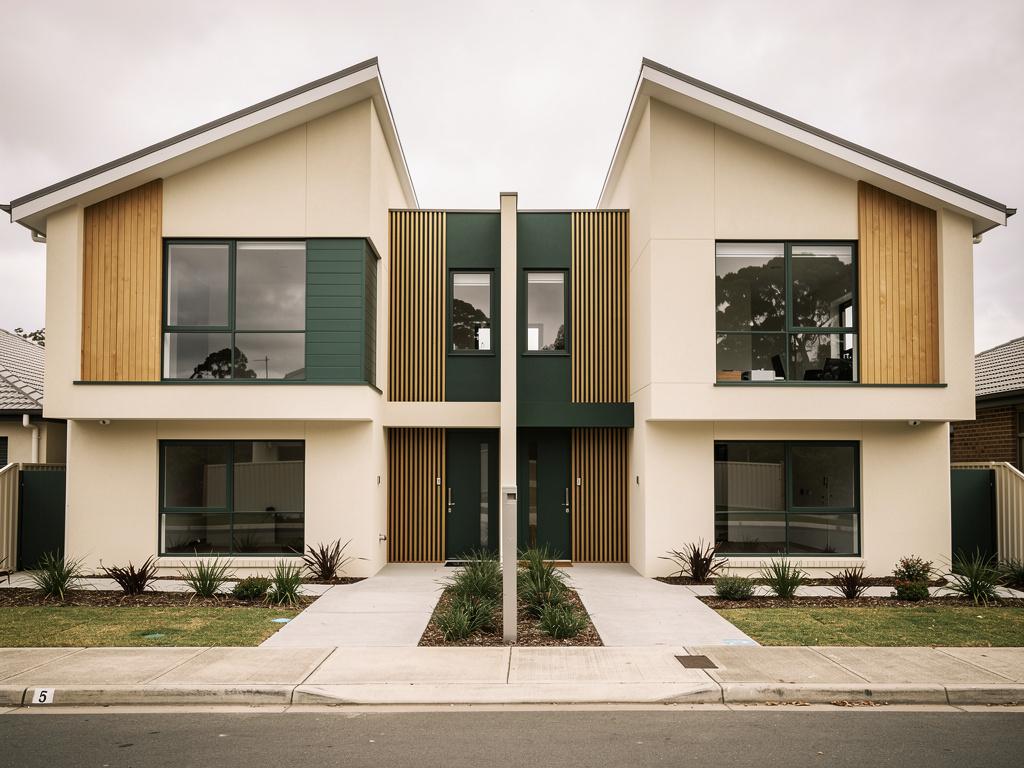
Architect-designed homes, townhouses, dual occupancy and medium density developments across South Australia and Victoria, under registrations held in the company name. Priced package by package, administered in writing, and scoped against conditions we publish in full.
- States we hold current residential registrations in: South Australia and Victoria
- 2
- South Australian building work contractor licence 344769
- BLD
- Victorian domestic builder (unlimited), registration 101761
- CDB-U
- Every instruction priced and approved in writing
- 100%
Where a commercial contractor adds most
A registered capability, pointed at the projects that reward it.
Our core business is commercial and industrial construction. The residential registrations we hold let us bring that discipline to the residential projects that genuinely benefit from it.
Offices, warehouses, laboratories, fitouts and refurbishments are what we build most weeks. Alongside that we hold current residential registrations in the company name in both South Australia and Victoria, which means we can take residential work under the same systems, the same estimating discipline and the same written contract administration we use on a commercial project.
That combination is worth most on the projects that are not standard: a difficult or steep site, a one-off architectural design, a heritage overlay, an infill development with neighbours on three sides, or a client who wants every variation priced and approved before it happens rather than explained afterwards.
A volume builder is purpose-built for the opposite case, a standard home on a standard block from an established range, and does that efficiently. Working out which kind of project yours is takes one conversation, and we are happy to have it early.
Why a commercial builder is a different proposition on a residential project. A volume residential builder works from a repeated set of standard details and prices a known product. A commercial builder works from a documented set for each project, prices from first principles and administers a contract with variations, progress claims and a defects liability period. The diagram shows that the commercial approach is what a one-off design, a difficult site or a client who wants a full paper trail is buying.
Two different trades, both called building
A volume residential builder
- A refined standard detail, repeated
- A known product, priced from a schedule
- A supply chain built around that product
- Fastest and cheapest when your project looks like their product
Built for a standard home on a standard block, at volume.
A commercial builder
- A documented set, read and priced per job
- Trades tendered openly, package by package
- A contract administered in writing: variations, progress claims, extensions, defects
- Slower to start, harder to surprise
Right answer for a difficult site, a one-off design, or a client who wants the paper trail.
We are the second one, and it is what a one-off design, a difficult site or a client who wants the paper trail is actually buying. Working out which kind of project yours is takes one conversation.
Scope
What our licence and our registration permit, published in full.
A number on its own says very little, because the conditions attached to it are where the scope actually lives. So here are ours, in the regulators’ own words.
In South Australia we are licensed : building work contractor’s licence BLD 344769, issued by Consumer and Business Services, covering residential building work restricted to National Construction Code classes 1 and 10. In Victoria we are registered : domestic builder (unlimited), CDB-U 101761, carrying the condition “restricted to Class 1 and 10 buildings”. The two states use different words for the same idea and we use each state’s.
The dividing line is vertical stacking and storey count, not project size or contract value. A twelve dwelling single storey townhouse row is inside our scope. One three storey house is not. That is counterintuitive the first time you read it, and it is the single most useful thing to understand about what we can build.
What the registrations actually permit
Within scope, up to two storeys
Class 1a
Houses, townhouses, terraces, dual occupancy
Class 1b
Small boarding and guest houses
Class 10
Garages, carports, sheds, outbuildings
Two storey limit
Both registrations carry a two storey limit. We publish it rather than leave you to find it.
Outside these registrations
Class 2
Apartment buildings, and any residential work above two storeys. We do not hold a registration for this work, so we do not tender it and we will say so on the first call rather than the fifth.
South Australia · building work contractor BLD 344769, residential work in classes 1 and 10. Victoria · domestic builder (unlimited) CDB-U 101761, restricted to classes 1 and 10.
A licence number on its own tells a client almost nothing, because every licence carries conditions and the conditions are where the scope actually lives. Both of ours are on the public register and both are above. Check them yourself: Consumer and Business Services in South Australia, and the Building and Plumbing Commission in Victoria. We would rather you did.
What we build
The residential work we take.
- New homes on difficult sites
- Steep or sloping blocks, retaining, poor ground, tight access, and infill sites where the neighbours are close enough that the sequence matters as much as the design. Ground conditions are where residential budgets are most often lost, and they are the part a commercial builder tends to read most carefully.
- Townhouses, terraces and dual occupancy
- Attached dwellings under Class 1a, up to two storeys. Party wall construction, acoustic and fire separation between dwellings, separate services to each, and a staging plan where the units complete in a sequence that suits settlement rather than convenience.
- Architect-designed one-offs
- Where the documentation is genuinely bespoke, the details are not from a standard catalogue, and the finish schedule is the programme. This is the closest residential work gets to what we do every day on a commercial fitout.
- Renovation, extension and structural alteration
- Working in and around an occupied or partly occupied home. Temporary support, staged weatherproofing, and the discipline of leaving a site every Friday in a state somebody can live next to.
- Garages, outbuildings and ancillary structures
- Class 10 work, either with a dwelling or on its own. Small, and frequently the thing that will not fit inside a volume builder’s system.
- What we do not take
- Apartment buildings, and any residential work above two storeys. Those sit outside our residential registrations, so we do not tender them. If that is your project we will tell you on the first call and, where we can, point you at somebody who holds the right class.
A licence number without its conditions tells you almost nothing. Ours are on this page.
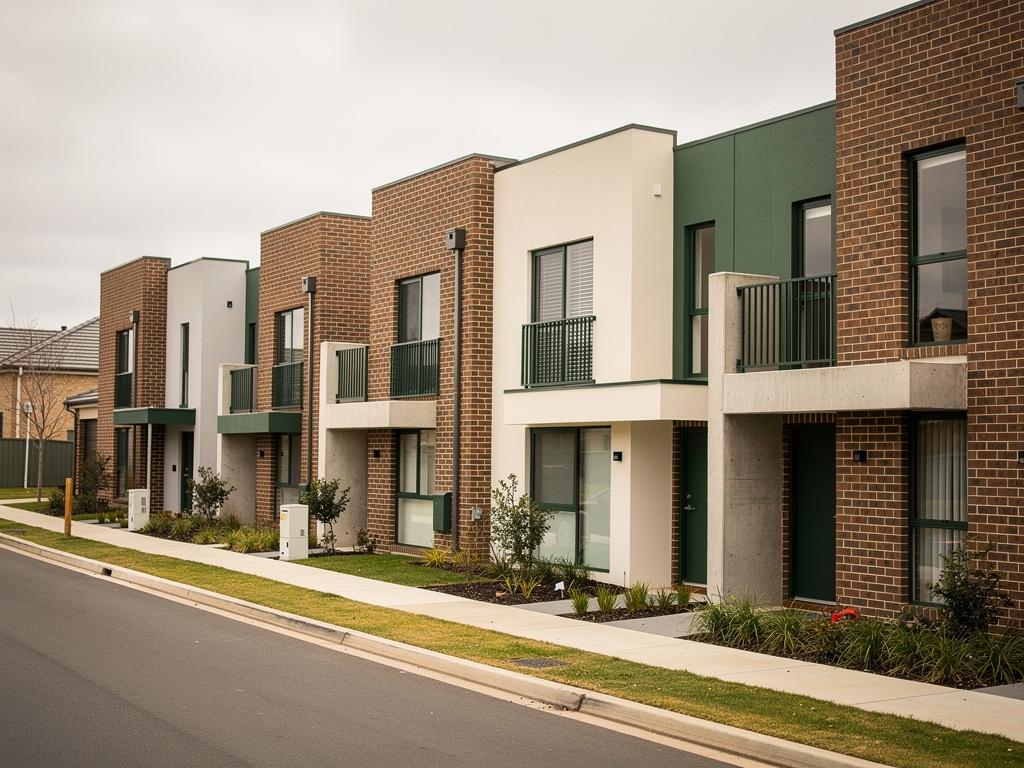
How a residential job runs with us
The same discipline, at a domestic scale.
- Priced package by packageTrades tendered on the drawings rather than allowed for as a lump. You see what each part of your house costs, which is also how you make a sensible decision when something has to give.
- One contract, one programmeA written contract with a start date, a duration and a payment schedule tied to stages you can see from the footpath, not to dates on a calendar.
- Variations before, not afterEvery change priced and approved in writing before the work happens. This is the single largest source of grief on residential projects and it is entirely avoidable.
- Defects taken seriouslyA defects liability period that we actually service, with a list agreed at handover rather than argued about afterwards.
Insurance and consumer protection
Domestic building work carries protections a commercial contract does not.
Residential work sits under a different regime from the commercial contracts that make up most of our year, and the differences favour you. In both South Australia and Victoria, domestic building work above a threshold value requires the builder to hold the statutory insurance for that state before work starts, and to contract on terms that carry statutory warranties.
Thresholds, cover and exclusions change, and they are set by the regulator rather than by us. We will confirm the current position in writing for your project before you sign anything, and we would encourage you to check it against the regulator directly.
Where to check
Consumer and Business Services publishes the South Australian requirements and a public licence register. The Building and Plumbing Commission does the same in Victoria, including a practitioner search that shows the class and any conditions. Both are free and neither of them needs to hear from us first.
Where we build
South Australia and Victoria.
South Australia
Head office and the larger part of our residential work. Development approval and building rules consent through the state planning system, and a trade base we price against every week.
Victoria
An active team and a domestic builder registration in the company name. Building permit path, appointed building surveyor, and the Victorian variations to the National Construction Code.
New South Wales
We build commercial and industrial work in New South Wales. We do not hold a residential builder licence there, so we do not take residential work in that state.
Projects
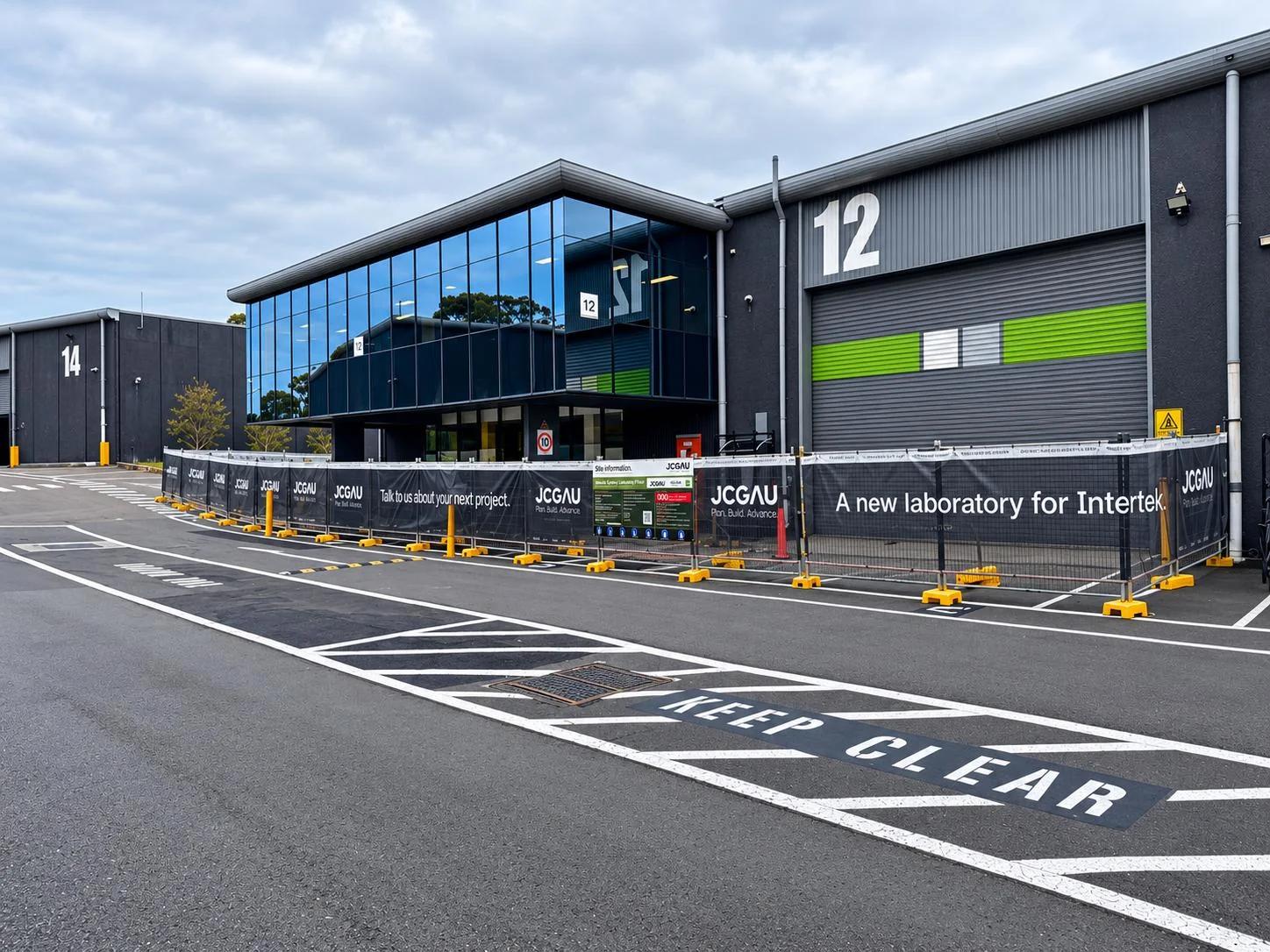 JCGAU
Labs & Research Facilities
Intertek Sydney Laboratory
Intertek Testing Services · Botany, NSW · In progress
- JCGAU
Labs & Research Facilities
Intertek Melbourne Laboratory Feasibility
Intertek Testing Australia · Melbourne, VIC · Delivered
- Prior firm
Aged Care
AVEO Carisfield
AVEO · Complete
- Prior firm
Aged Care
AVEO Riverview
AVEO · Complete
- Prior firm
Education
Le Fevre High School
The education department · Complete
- Prior firm
Education
Mount Barker High School
The education department · Complete
- Prior firm
Education
Parafield Gardens High School
The education department · Complete
- Prior firm
Education
SAE campus
Navitas · Complete
- Prior firm
Education
St Columba College Stage 2
Complete
Prior firm: the director’s contribution at a previous firm, not JCGAU-delivered work.
Within residential construction
Medium Density & Townhouses
Repeatable detail, buildable at scale. Townhouse and terrace developments of up to around twenty dwellings at one or two storeys, down to a dual occupancy.High-End Residential
Where the finish schedule is the programme. Architect-designed homes and substantial renovations, with a contract administered the way a commercial one is.
Related
Medium Density & Townhouses
Repeatable detail, buildable at scale. Townhouse and terrace developments of up to around twenty dwellings at one or two storeys, down to a dual occupancy.High-End Residential
Where the finish schedule is the programme. Architect-designed homes and substantial renovations, with a contract administered the way a commercial one is.Commercial Construction
Office, education, health, hospitality and retail. New builds, design and construct, fitout, refurbishment and end-of-lease make-good, under one contract.
Where to go next
Medium density and townhouses
Townhouses, terraces and dual occupancy at one or two storeys.High-end residential
Architect-designed homes and substantial renovations.Delivery models
Construct only, design and construct, managing contractor and early involvement.How we work
How we price, procure, administer and report, described as mechanisms you can test.Adelaide and South Australia
Licensed builder BLD 344769, with the head office and estimating team here.Melbourne and Victoria
Registrations CCB-L 100384 and CDB-U 101761, held in the company name.
Questions
Are you actually licensed for residential work, or just commercial?
Both, in two states. In South Australia, licence BLD 344769 covers residential work in National Construction Code classes 1 and 10. In Victoria we hold a domestic builder (unlimited) registration, CDB-U 101761, restricted to classes 1 and 10. Both carry a two storey limit. All of that is on the public register.
Can you build an apartment block?
No. Apartments are Class 2, which sits outside our residential registrations, as does any residential work above two storeys. We will say so immediately rather than work out later that we cannot sign the contract.
Why would I use a commercial builder for a house?
For a difficult site, a one-off design or a client who wants the contract administered properly. Not for a standard home on a flat block, where a volume builder will be faster and cheaper and we will tell you so.
Is a commercial builder more expensive?
On a standard project, usually yes, because we are not buying a repeated product at volume. On a non-standard project the comparison often runs the other way, because the work that does not fit a standard system tends to arrive as a variation later.
Do you do the design as well?
We can run it as a design and construct contract, where the design and the price move together under one contract, or we can build to your architect’s documentation. Both are normal and they suit different clients.
Who is actually running my job?
The director is involved in the projects, the pricing and the delivery, and is contactable on every job. That is a deliberate limit on how much work we take at once.
Send us the drawings and the site address.
The site tells us more than the brief does. If your project is better suited to a volume builder we will say so, and that will cost you nothing but the conversation.