Turnkey, so you do not have to run the project.
Four ways to buy a building, and what each one leaves on your side of the table. Under a turnkey design and construct contract the answer is very little.
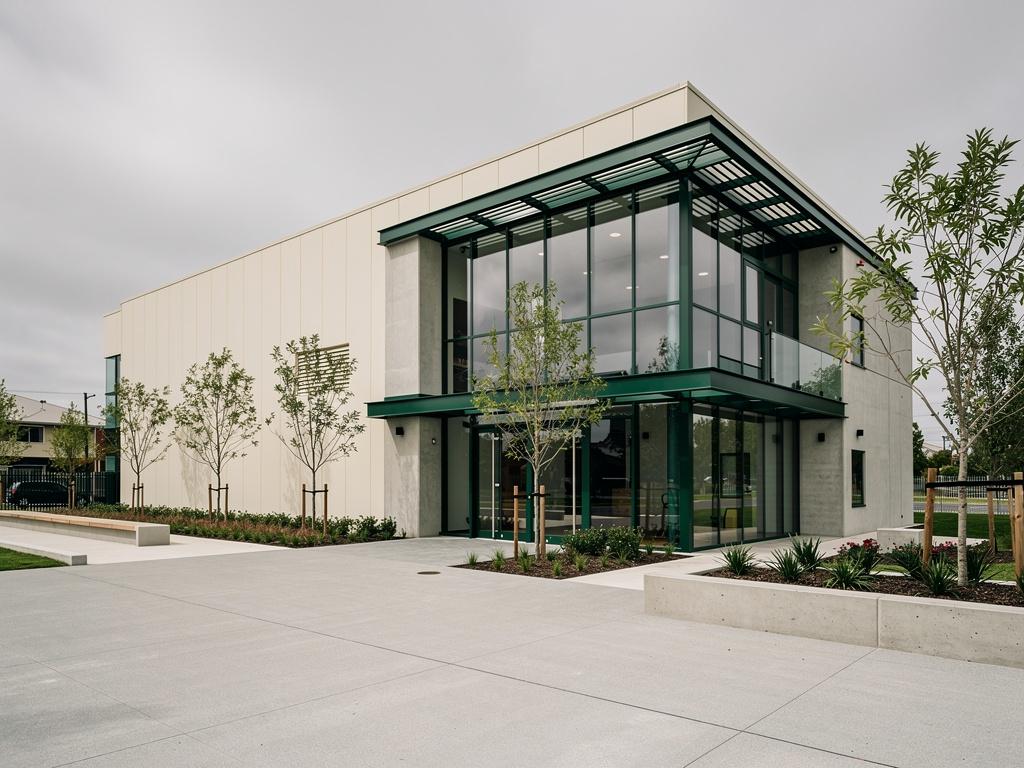
- Contract, one price, one party answerable
- 1
- Delivery models we work under
- 4
- Project capacity under a single contract
- $20m
- States we build in: South Australia, Victoria and New South Wales
- 3
The offer
One contract, and you keep doing your job.
Most organisations that build something do not want to become a construction business for eighteen months. Turnkey exists so they do not have to.
Under a turnkey design and construct contract we hold the design, the consultants, every trade contract, the programme and the construction risk. You brief us, you make the decisions only you can make, and you take the keys. There is no project team for you to stand up, no consultant panel for you to manage, and no coordination gap for you to fall into when the drawings and the building disagree.
That is the whole argument for the model, and it is a real one. It is also not the right model for every project, so the rest of this page sets out the four honestly and says which one we would recommend and when.
What turnkey removes, and what it does not
It removes the need for a client-side project management function. It does not remove the need for someone independent to certify our payment claims, value our variations and assess our extensions of time. That is one appointment rather than a team, it is inexpensive, and it cannot be us. We will say that in the first meeting rather than leave you to discover it.
The model
Four ways to buy a building.
Responsibility matrix across four delivery models. Under construct only JCGAU procures the trades, holds the trade contracts and carries construction risk while the client designs the building and runs the project. Under design and construct JCGAU also designs it, and the client only has to make decisions. Under EPCM the client holds the trade contracts and carries the construction risk while JCGAU manages. Under client-side project management another builder holds everything and JCGAU certifies on the client’s behalf. Payment is certified by an independent party in the first three models.
Who holds it
| Construct only | Design and construct | EPCM | Client-side PM | |
|---|---|---|---|---|
| Who designs it | You | JCGAU | You | You |
| Who procures the trades | JCGAU | JCGAU | JCGAU | Another builder |
| Who holds the trade contracts | JCGAU | JCGAU | You | Another builder |
| Who carries construction risk | JCGAU | JCGAU | You | Another builder |
| Who coordinates day to day | JCGAU | JCGAU | JCGAU | JCGAU |
| Who certifies payment | Independent | Independent | Independent | JCGAU |
| What your own team does | Runs the project | Makes decisions | Holds contracts and risk | Makes decisions |
Copper is what we hold. In the second column we hold everything except the certificate, which is the one thing we should not hold.
The distinction
Turnkey and EPCM are opposite arrangements.
They are often written about as though they were the same offer. They are not, and the difference is who signs the trade contracts.
Under design and construct we sign every trade contract, so if a trade fails, the consequence is ours to absorb inside a price you already agreed. Under EPCM you sign every trade contract and we manage them for a fee, so if a trade fails the consequence reaches your balance sheet and we help you deal with it.
Both are legitimate and both are used on serious projects. EPCM suits an owner with an internal capability who wants visibility of every buy and is prepared to carry the risk that comes with it. Turnkey suits an owner who wants a building, a date and a number.
Two contract structures compared. Under turnkey design and construct the client signs one lump sum contract with JCGAU, JCGAU appoints the consultants and every trade contractor, and the construction risk sits with JCGAU. Under EPCM the client signs a services agreement with JCGAU and signs each trade contract themselves, so the risk and the invoices stay with the client and JCGAU manages on their behalf. The first removes the need for a client project management function; the second does not.
Turnkey design and construct
You
one contract, one price, one party answerable
JCGAU
holds the design, the trades and the construction risk
Consultants
Every trade contractor
What your team does
Brief us, make decisions on time, appoint one independent certifier. No project team required.
EPCM
You
many contracts, one manager, your risk
JCGAU
manages, but holds no trade contract
Trade contractors, contracted to you
What your team does
Signs every trade contract, pays every invoice, carries the risk if a trade fails. A real workload.
Turnkey exists so that building something does not turn you into a construction business.

The comparison
What each model actually costs you in effort.
Comparison of how much work each delivery model leaves on the client's side of the table. Construct only leaves a large amount: managing consultants, coordinating design against the build and appointing a superintendent. EPCM leaves the most: holding every trade contract and carrying the construction risk. Turnkey design and construct leaves the least: briefing, timely decisions and one independent certifier. Client-side project management is not a delivery model but an appointment that absorbs the client's workload on somebody else's build.
What is left on your side of the table
Construct only
consultants, design coordination, a superintendent
EPCM
every trade contract, and the risk
Design and construct, turnkey
brief, decisions, one independent certifier
Client-side PM on another build
decisions, while we hold the rest for you
Turnkey is the model that removes the need for a client-side project management function.
It is not the cheapest model on every project, and we will say so when it is not.
How to choose
What we would ask you.
Is the design done?
A documented design points to construct only or novated design and construct. A blank page points to turnkey or early contractor involvement.
Do you have a project team?
If you would have to hire one to run this, turnkey is usually the cheaper answer once the salaries are counted.
Do you want the price fixed early?
Turnkey fixes it at contract. EPCM reveals it progressively, buy by buy.
How much risk do you want to hold?
Under EPCM you hold the construction risk. Under turnkey we do, and we price it.
The turnkey scope
What is inside the one contract.
- Design
- Architectural, structural, services and specialist consultants engaged and coordinated by us, against the brief you set. Where you already have a designer, we take the team across by novation and hold them from that point.
- Approvals
- Planning, building and occupancy consents in whichever state the project sits, plus the referrals that attach to the use, lodged and managed by us.
- Procurement
- Every trade and supply package tendered, assessed and contracted by us, with long-lead items identified in the first fortnight and reported monthly against a procurement schedule.
- Construction
- The works, the programme, site safety, the subcontractors and the interfaces. One number, one date, one party to call.
- Commissioning and handover
- Systems proved, certificates collected as the work happens, operating and maintenance data assembled, and training delivered to the people who will run the building.
- Defects liability
- Managed by us through to expiry, with a single point of contact who was on the project rather than a service desk.
Where turnkey is not the answer
Said plainly, because it matters.
- When the design is genuinely finishedIf a full documented set already exists and you are happy with it, a traditional contract will usually price it more keenly than a design and construct wrapper around the same drawings.
- When the brief cannot be written downTurnkey transfers risk against a brief. If nobody can yet say what the building has to do, we would rather run early contractor involvement first and convert later.
- When you want to see every buySome owners want visibility of each trade price and are prepared to carry the risk to get it. That is EPCM, and it is a reasonable choice.
- When the project is above our capacityOur single-contract capacity is $20 million. Above that we would tell you rather than take it and resource it thinly.
- When you already have a project teamIf you have the internal capability and it would otherwise be idle, the arithmetic can change. We will do that arithmetic with you rather than around you.
Consistency
How this sits with our conflicts rule.
Elsewhere on this site we set out a bright line: we will not act as your project manager, superintendent or certifier on a project we are building. This page is the other side of that same rule.
If we build it turnkey, you do not need to appoint a project manager, because the project management is inside our contract and we are answerable for it. What you should still appoint is one independent person to hold the certifying pen. That is not a contradiction of the rule. It is the rule working as intended.
Projects
 JCGAU
Labs & Research Facilities
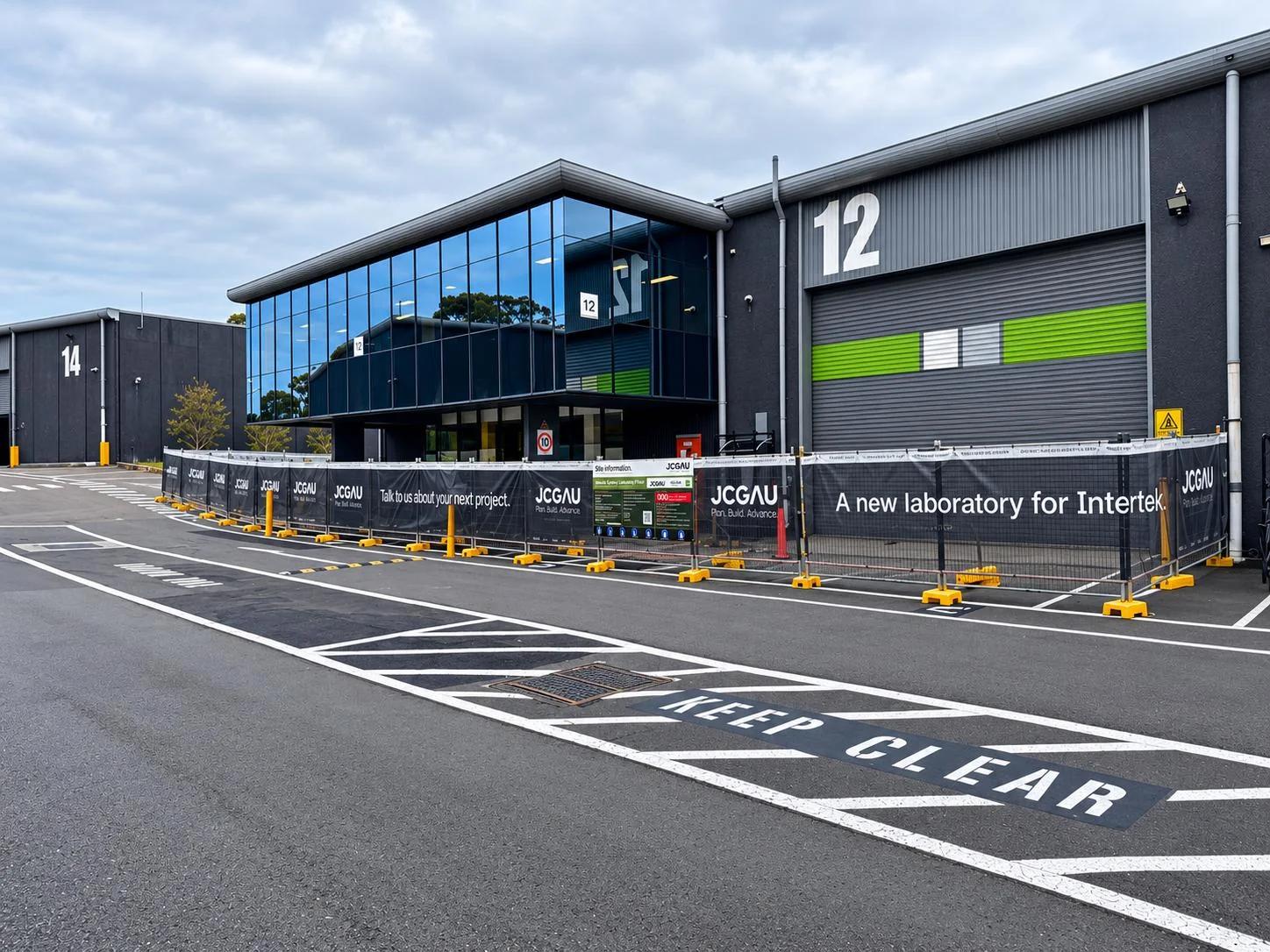
Intertek Sydney Laboratory
Intertek Testing Services · Botany, NSW · In progress
- JCGAU
Labs & Research Facilities
Intertek Melbourne Laboratory Feasibility
Intertek Testing Australia · Melbourne, VIC · Delivered
- Prior firm
Aged Care
AVEO Carisfield
AVEO · Complete
- Prior firm
Aged Care
AVEO Riverview
AVEO · Complete
- Prior firm
Education
Le Fevre High School
The education department · Complete
- Prior firm
Education
Mount Barker High School
The education department · Complete
- Prior firm
Education
Parafield Gardens High School
The education department · Complete
- Prior firm
Education
SAE campus
Navitas · Complete
- Prior firm
Education
St Columba College Stage 2
Complete
Prior firm: the director’s contribution at a previous firm, not JCGAU-delivered work.
Related
Design & Construction
One point of accountability. The design and the price move together. Design and construct, and novated design and construct, for commercial projects.Client-Side Project Management
Representing the client, not the builder. Project manager, superintendent or contract administrator on somebody else’s build. On any one project we do this or we build, never both.Commercial Construction
Office, education, health, hospitality and retail. New builds, design and construct, fitout, refurbishment and end-of-lease make-good, under one contract.
Where to go next
Client-side project management
Where you want us acting for you rather than building for you.Commercial construction
Offices, retail, hospitality and institutional work, from fitout to new build.Industrial construction
Warehouses, distribution and production facilities, and the fitout inside them.Design and construct
One contract carrying both the design and the price.How we work
How we price, procure, administer and report, described as mechanisms you can test.
Questions
Does turnkey mean we have no say in the design?
No. It means you set the brief and approve the design rather than procuring and coordinating the consultants yourself. The tighter your brief, the more say you have, which is why we would rather help you write it.
Do you offer EPCM?
Yes, where an owner wants it and has the capability to hold the trade contracts. We will tell you honestly whether we think it serves you better than turnkey on your particular project.
If you hold everything, who protects us?
The contract, the brief, and one independent certifier. That is the same protection a much larger organisation relies on, and it costs a fraction of a project team.
Can we start turnkey and change later?
Early contractor involvement converting to a turnkey contract at an agreed design stage is a common and sensible path. We can also stop at the conversion point if the numbers do not work, which is the point of doing it that way.
What size projects do you deliver turnkey?
Up to $20 million under a single contract, across South Australia, Victoria and New South Wales.
Tell us what you need and who is available to run it.
Those two answers usually decide the model before anyone talks about price. If the answer to the second is nobody, turnkey is probably your model.