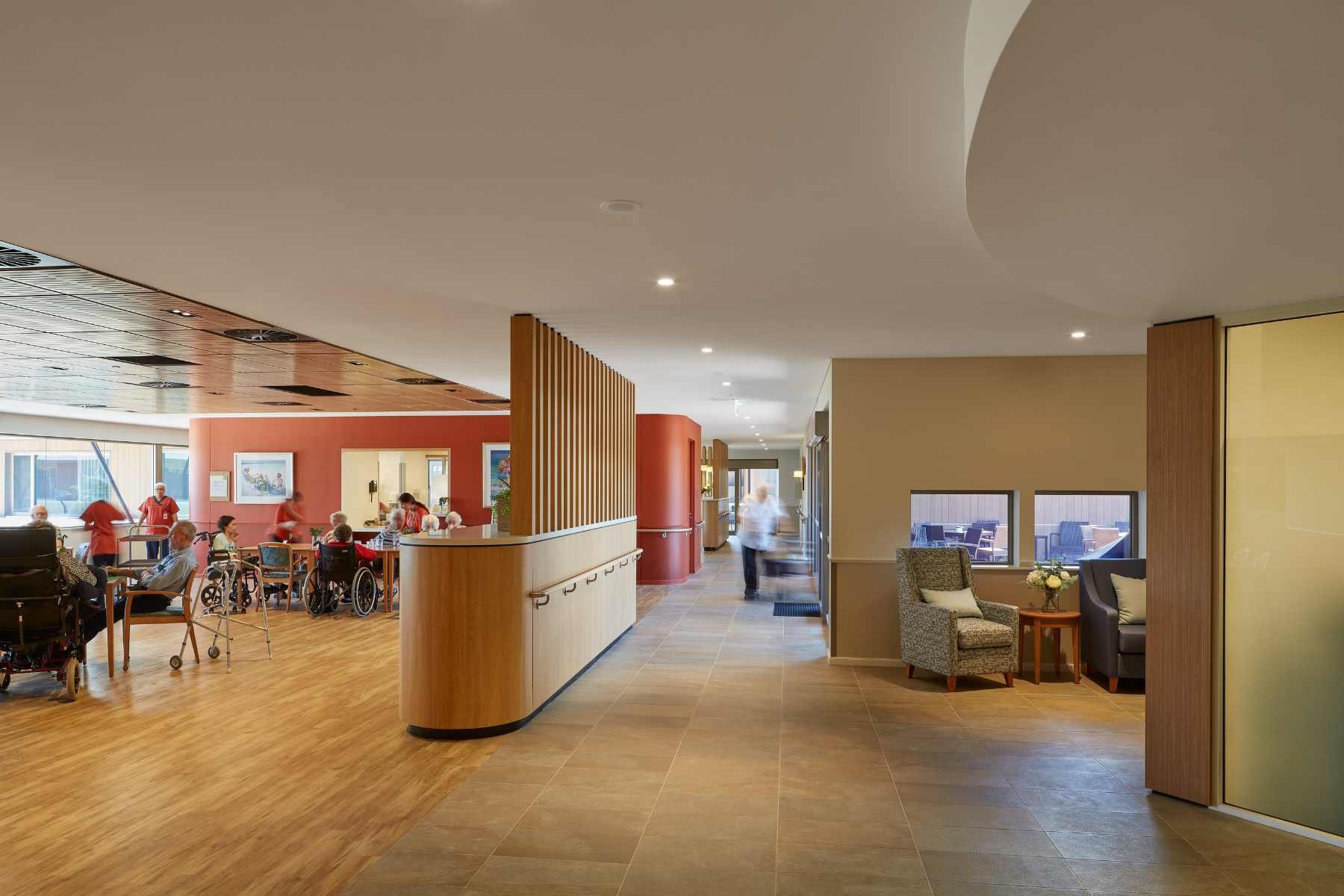
The constraint
A resident in a care home has no office to work from and no other bedroom to sleep in. Everything about the way we work follows from that.
We treat aged care as a commercial sector, not a residential one. The work is refurbishment and upgrade of operating facilities: communal and dining areas, clinical and care spaces, back of house, and the compliance works an audit or an insurer asks for. We do not take residential aged care new build.
So the planning question is not how fast the work can be done. It is how few residents have to experience it, for how short a time, and how completely their day can be left alone.
One wing out of service at any time
Wing B
Prepare
The receiving wing is finished and ready before anyone moves. Care team writes the plan.
Decant wing A
Residents move once, with their own belongings, on a day the care team picks.
Works in wing A
Sealed boundary, separate access, filtration, fire systems live throughout.
Return
Wing A handed back complete, then the same sequence runs in wing B.
The number of residents who experience construction is the number in one wing, and each of them experiences it once. That is the whole reason a decant plan is worth the preliminaries it costs.